• Skip to secondary menu
  • Skip to main content
  • Skip to footer
  • HOME
  • About
  • The Rules
  • Technology
  • Terminology
  • Lessons Learned
  • About Me
  • The UGLY

Feathers and Fuzz

one woman's cure for the empty-nester blues

  • Index of Posts
  • Meet the Feathers
  • Meet the Fuzz

Carolina Wren

The Case of the Missing Nest

November 29, 2017 by MoJo

We’ve seen, in an earlier post (Flicker Didn’t Read Instructions), that the birds don’t always agree with the instructions given to humans who manage nest sites.  One such instruction is to remove the nest after the nestlings fledge.  The primary reason for the instruction is to eliminate pests (i.e., bird mites) that inhabit nesting material — providing a clean nest box for each brood.

Well, my birds are on to me.  This year, the Eastern Phoebe started refreshing her nest within one hour of the prior brood fledging — a clear message to this human:  LEAVE MY HOUSE ALONE!!  The Carolina Wrens, however, were the first to demonstrate a difference of opinion on nest removal.  At least one Wren pair starts nest building in February.  Their first brood fledges in mid-March.  In 2016, I tore the Wren nest down right after the four nestlings fledged — per the “instructions”.  As the video will explain, I now leave the first Wren nest of the season in place for at least a week after the young fledge.
https://www.feathersandfuzz.com/wp-content/uploads/2017/11/Missing-Nest-Video.mp4

Filed Under: Carolina Wren, Feathers Tagged With: Carolina Wren Missing Nest

Nesting Challenges: Cold and Hot Weather

November 26, 2017 by MoJo

2017 presented us with an unseasonably-warm February.  The Carolina Wrens and Eastern Bluebirds started nest-building and egg-laying very early.  Eggs are laid at the rate of one per day.  Female parents do not typically spend the night on the nest until all eggs have been laid -- the idea being to incubate all eggs an equal amount of time so all eggs will hatch about the same time.  For spring nesters, especially, this delayed-incubation comes with a risk -- an overnight cold-snap, before the female is sitting on the eggs overnight, can kill the embryos.


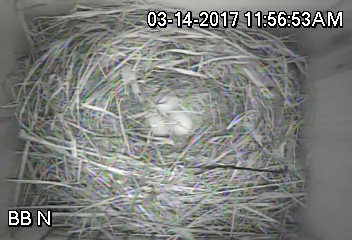
The Bluebird pair produced 3 eggs, but then their behavior indicated things were not going according to plan.  Soon the pair started bringing additional nesting material to bury the existing eggs.  The cold nights had killed the embryos.  The pair began the nesting process again -- this time successfully.

Bluebirds Bury Eggs
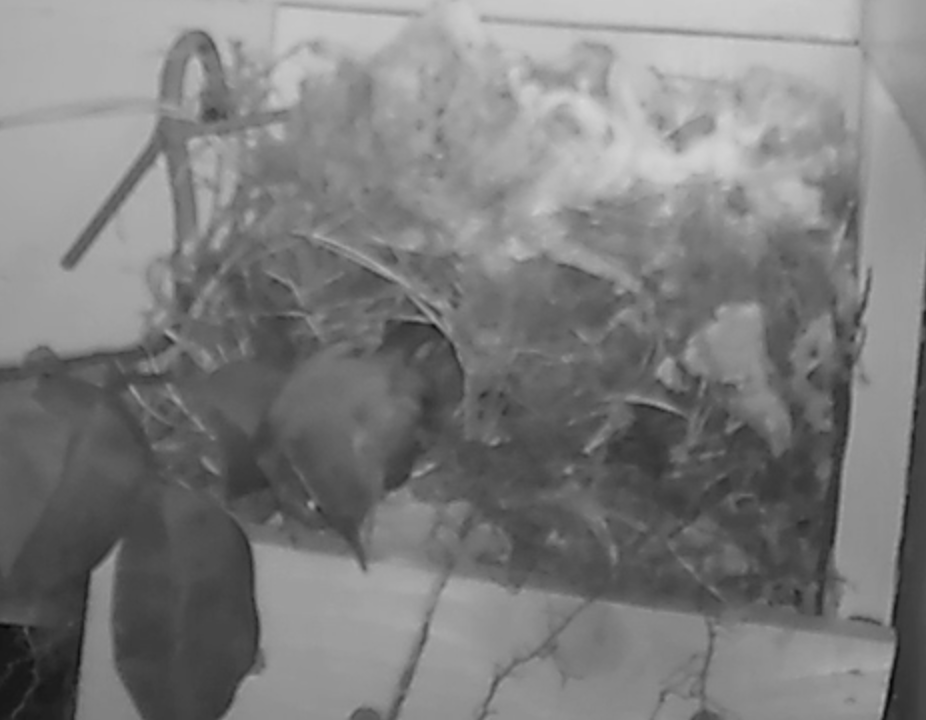
Wren Parent Leaves Nest in Morning


The Carolina Wrens had a different story.  The pair produced two eggs.  BOTH adults spent the night in the nest -- from the time the eggs were laid until the nestlings fledged.  I have never seen a male do this before, but somehow this pair knew that it would take the body heat of both parents to keep the embryos/nestlings alive.  (One of the two parents is shown leaving the nest in the photo.)


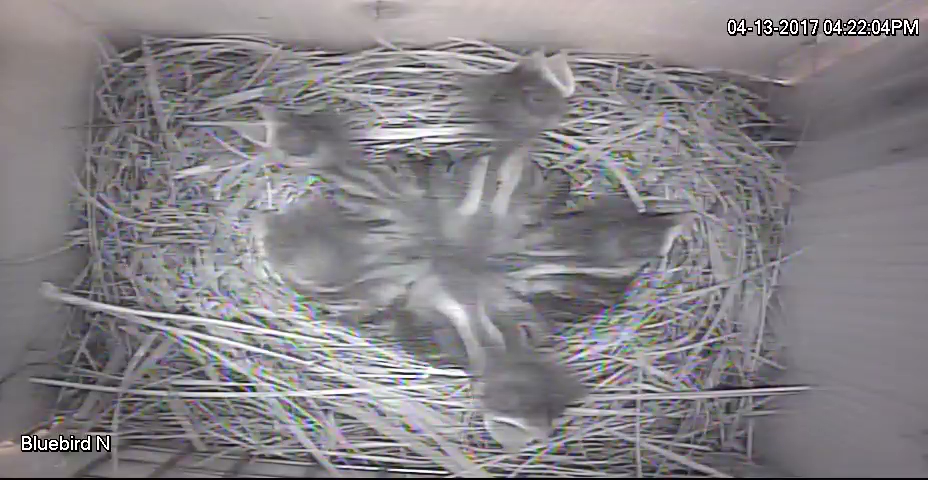
Birds producing eggs well-into July are presented with the opposite challenge.  Bird houses can be brutally hot -- even in April.  Like dogs, nestlings will pant when hot.  They will also align into an X-formation in the nest to allow maximum air circulation around their bodies.

BB Nestlings in Cooling-X

We just won't go into the fans, umbrellas and sun-shades I may have employed on their behalf.

Up next ...

When a human follows the rules the birds did not write ...

Filed Under: Bluebird, Carolina Wren, Feathers Tagged With: Weather Impact on Nestlings

  • « Go to Previous Page
  • Page 1
  • Interim pages omitted …
  • Page 8
  • Page 9
  • Page 10
  • Page 11
  • Page 12
  • Interim pages omitted …
  • Page 14
  • Go to Next Page »

Footer

Contact Us*

Get Social & Follow Us On

This is the day the Lord has made; let us rejoice and be glad in it. Psalm 118:24

See "First Blog"

Copyright © 2026 Feathers and Fuzz